


UAS In Low Temperature Environments

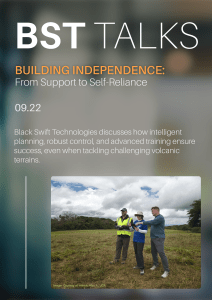
Operating Unmanned Aircraft Systems (UAS) in low-pressure, low-temperature environments—from high-altitude zones to the polar regions—presents challenges that go beyond fundamental engineering. While overcoming reduced aerodynamic lift and managing electronics in extreme cold are vital starting points, the defining hurdles for high-value missions are often operational and strategic: navigating volatile terrain, ensuring reliable communication, and adapting to atmospheric unpredictability.
Achieving success in these difficult environments often relies on a vertically integrated approach. This means that every system component, from the airframe materials to the flight intelligence software, is designed and developed together, ensuring optimal performance and resilience. Our experience across high-altitude and extreme-weather campaigns offers key insights into this strategic imperative.
Platform Engineering for Environmental Reliability
Relying on a general-purpose drone introduces significant risk when temperatures drop and air density thins. Operational effectiveness is best supported by specialized vehicles where environmental resistance is a core design criterion.
For arctic endurance, missions in environments like the Greenland campaign required platforms capable of over 100 flights in an average of −20∘C and reaching altitudes up to 14,000 feet. This success requires carefully selected materials that maintain their properties against the brittleness of extreme cold, alongside aerodynamic designs optimized for stability in thin air. Similarly, navigating volcanic turbulence—where aircraft encounter 50-knot winds and rapid 1600 ft/min downdrafts—necessitates robust structural components complemented by active control systems to maintain flight stability.
To manage atmospheric penetration, sensitive electronics are protected by sealed designs to prevent moisture condensation and subsequent circuit failures during flight transitions.
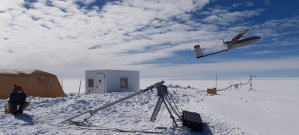
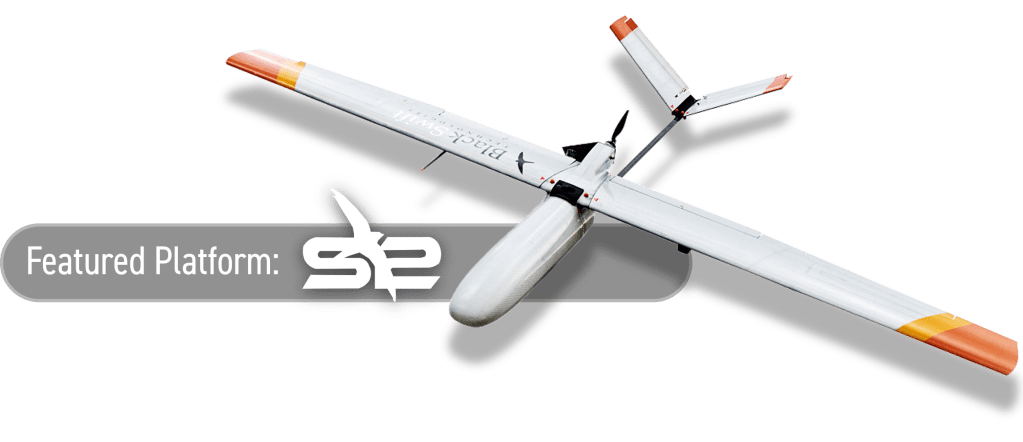
This drone can outlast even the most extreme temps! From volcanoes to the arctic, the Black Swift S2 Fixed-Wing UAS endures even the most volatile conditions.
Utilizing Integrated Autonomy for Data Optimization
A robust airframe is best leveraged when paired with intelligent avionics. We find that a vertically integrated Flight Management System (FMS), like Black Swift’s Swiftcore FMS, provides the adaptive intelligence necessary for superior performance in volatile airspace.
Sensor-Reactive Control for Targeted Data Acquisition
Black Swift UAS benefit from autonomy that goes beyond basic waypoint navigation, allowing the system to react to real-time atmospheric phenomena. For scientific sampling, this often involves the aircraft using logic to autonomously track and optimize its path within a plume or gas source (e.g., following chemical concentration gradients). This sensor-reactive control significantly improves the quality and relevance of collected data compared to static, pre-planned routes.
AI-Enhanced Predictive Safety Integrating
Onboard AI algorithms allows for proactive risk management. This involves systems that can predict environmental hazards, such as the onset of icing conditions, and autonomously initiate a route diversion. This capability is a valuable safety measure in low-temperature operations. Furthermore, the operator interface is designed to reduce stress during complex events by automatically prioritizing critical warnings and offering clear, immediate steps for failure mitigation.
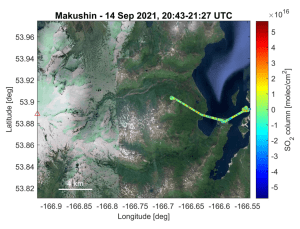
This map from our Alaskan volcano Makushin mission tracks the S2’s successful collection of trace gas data (e.g., volcanic SO 2) using sensors engineered for extreme, low-pressure environments.
Developing Adaptive Protocols for Unwavering Control
While technology provides capability, mission success in remote and hostile theaters often hinges on adaptable, high-reliability operational procedures. These protocols address logistical and environmental challenges that hardware alone cannot resolve.
Ensuring Command Continuity
In complex terrain where line-of-sight (LoS) communication failure is a common challenge, protocols like a Mid-Flight Ground Station Handoff procedure are employed. This involves using two strategically positioned ground crews to seamlessly transfer control, guaranteeing command continuity over the asset. This strategy is key to safely extending the operational envelope into areas with topographical masking.
Mitigating Empirical Risk
Relying solely on surface weather observations can be risky in complex topography. Following experiences with unpredicted wind shear, a protocol for on-site wind scouting was developed. Before launching the main fixed-wing asset, a secondary multirotor performs a rapid ascent to profile the local air column. This provides real-time, empirical data for a data-driven go/no-go decision, helping to prevent launches into unseen turbulent conditions.
Systematic Flight Planning
Mission integrity is strengthened by rigorous planning. Custom planning software integrates all mission constraints, including custom Digital Elevation Models (DEMs), battery life, and dynamic LoS checks. This approach transforms complex flight planning into a safe, verifiable, and repeatable process, supporting both mission success and regulatory compliance.
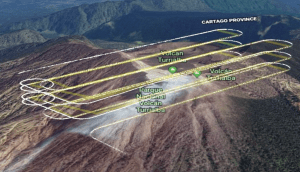
Advanced terrain-aware flight planning, supplemented by onboard Ai. Courtesy of Black Swift Technologies.
Achieving Operational Certainty
Successfully
Conducting UAS missions in low-pressure, low-temperature environments is a specialized endeavor. It requires an integrated system of specialized hardware, adaptive intelligence, and reliable operational protocols.
This commitment to operational certainty helps ensure that missions not only meet the demands of the extreme environment but also deliver unique, high-fidelity data previously considered unattainable. This holistic approach is often the determining factor in advanced deployments.
We welcome the opportunity to discuss your specific operational challenges and explore how these integrated strategies can support your next high-value mission.
Visit bst.aero to get a free quote on our high-altitude UAS platforms, purpose-built for extreme missions. Any mission, our solution. Contact us today!